Back To Blog
If you currently have ulcerative colitis, you likely know it requires ongoing management. What you might not realize, however, is that ulcerative colitis is also linked to a higher risk of colorectal cancer.
People with ulcerative colitis are six times more likely to develop colorectal cancer. The more extensive your colitis and the longer you have it, the greater your risk of colorectal cancer. That said, only about 5% of individuals with severe ulcerative colitis develop colorectal cancer. The good news is that there are proactive steps you can take to lower your risk.
What is Ulcerative Colitis?
Ulcerative colitis is a type of inflammatory bowel disease (IBD). Researchers believe it may be related to an immune system malfunction that attacks the colon. It causes inflammation, irritation, and ulcers (sores) in the inner lining of the colon and rectum. Ongoing inflammation can cause genetic changes in colon cells, leading to dysplasia (abnormal cells) that can turn into cancer.
Men are at a higher risk of developing ulcerative colitis. The exact cause isn’t fully understood. Most people are diagnosed before age 30, though it can occur later in life. Family history can play a role for some individuals. However, most people diagnosed with ulcerative colitis do not have relatives with the disease. Frequent use of NSAIDs such as aspirin, ibuprofen, or naproxen may also increase risk.
There is currently no cure for ulcerative colitis, but medications and lifestyle adjustments can help control inflammation and support long-term remission. Managing flare-ups effectively is one of the most important ways to reduce your risk for developing colorectal cancer.
Understanding Colorectal Cancer
Colorectal cancer develops in the colon, rectum, or both. It often begins as a small, noncancerous growth called a polyp. Over time, some polyps can become cancerous.
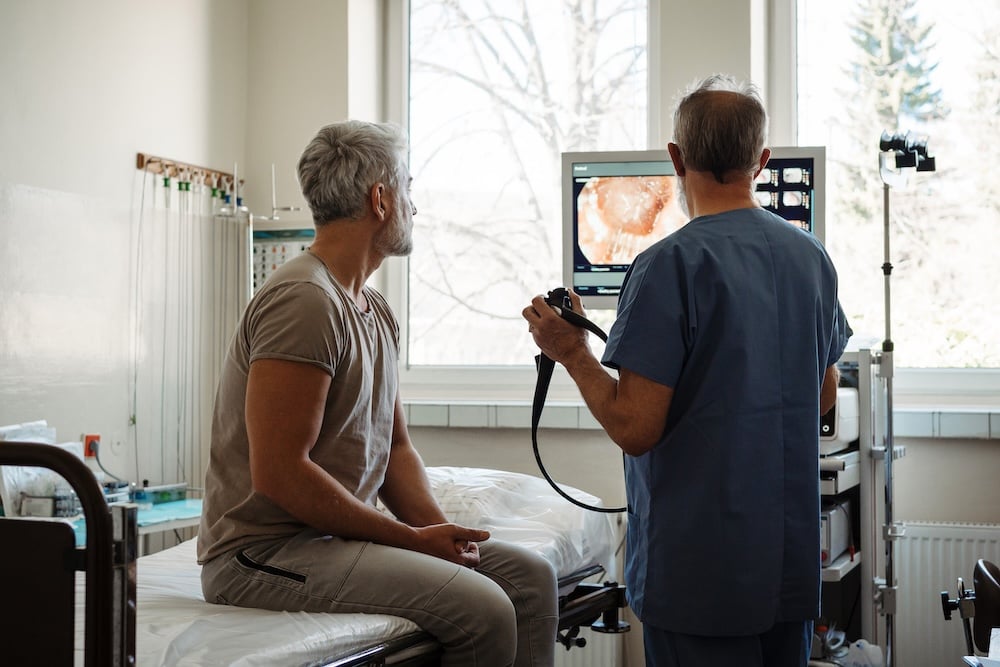
Colorectal cancer often develops without noticeable symptoms, which is why screening is important. If you have ulcerative colitis, a colonoscopy every two years is likely part of your management plan. Talk with your doctor about the timing that's right for you.
The colonoscopy will help your gastroenterologist identify and remove any polyps or areas that appear abnormal.
One symptom of both an ulcerative colitis flare-up and colorectal cancer is blood in the stool. Be sure you talk with your doctor about this so proper tests can be run.
Learn more about risk factors for colorectal cancer.
How Does Ulcerative Colitis Increase the Risk of Colorectal Cancer?
Those with ulcerative colitis are at a higher risk of developing colorectal cancer if they:
- Have a family history of ulcerative colitis
- Were diagnosed at a young age
- Have had ulcerative colitis for more than eight years
- Have inflammation affecting most of the colon
- Experience ongoing, uncontrolled inflammation
- Have precancerous cell changes
- Had their appendix removed
- Have bile duct damage related to inflammation or scarring
- Have immune-weakening conditions such as diabetes
Chronic Inflammation in the Colon from Ulcerative Colitis
Chronic inflammation plays a significant role in the relationship between ulcerative colitis and colorectal cancer. Long-term inflammation can:
- Damage the colon lining and destroy normal cell repair
- Lead to DNA damage in the colon cells, which can contribute to ulcers forming
- Promote molecules that encourage tumor growth
- Increase susceptibility to infections that can lead to cancer development
The Importance of Regular Screening for Colorectal Cancer for Those With Ulcerative Colitis
Colorectal cancer is highly treatable, especially when detected early. Identifying and removing polyps before they become cancerous offers the best chance for prevention and cure. This makes the entire process easier on you, less invasive, reduces the chance of it spreading to other organs, and is less expensive than late-stage cancer treatment.
For individuals with ulcerative colitis, screening often begins earlier and occurs more frequently than for those without UC or considered average risk.
How Can I Reduce My Cancer Risks?
Healthy lifestyle choices are especially helpful in reducing risk and supporting overall digestive health. Some important steps you can take include:
- Quit smoking
- Limit alcohol consumption
- Eat a balanced diet rich in fruits, vegetables, whole grains, lean proteins, nuts, and beans. Limit red and processed meats, sugary drinks, and heavily processed foods. Avoid frying, broiling, or grilling meats at high temperatures, as it can increase cancer risk.
- Stay well-hydrated, aiming for 100 ounces of water each day
- Maintain a healthy weight
- Stay physically active for at least 30 minutes most days
- Keep up with recommended colorectal cancer screenings
What to Do if You Have Ulcerative Colitis and Receive a Colorectal Cancer Diagnosis
If you’re living with ulcerative colitis and receive a colorectal cancer diagnosis, your treatment plan may differ slightly from that of someone without this condition. Be sure to share this condition with the oncologist in your new patient paperwork.
At Rocky Mountain Cancer Centers, our gastrointestinal (GI) cancer specialists take a comprehensive approach to care. We work closely with each other, your gastroenterologist, and with you to develop a personalized treatment plan tailored to your needs. We will also consider your type and severity of ulcerative colitis when recommending chemotherapy and immunotherapy, which can lead to digestive side effects.
If you’ve been diagnosed with colorectal cancer, we’re here to help guide you every step of the way. Request an appointment at one of our cancer centers throughout Colorado, including the Denver area, Boulder, Colorado Springs, and Pueblo.