Leukemia


Teaming Up to Protect Your Health
In addition to a highly qualified leukemia doctor, your team at RMCC includes nurses, counselors, and various support staff who share a common goal – protecting your health. Our coordinated approach to leukemia treatment, delivered with sensitivity and kindness, ensure you receive the absolute best care possible.
Leukemia Frequently Asked Questions
When staging a solid tumor cancer, the staging system is based on the tumor size, lymph node involvement, and distant cancer growth. Because leukemia is a blood and bone marrow cancer, it doesn’t usually form a mass in one location (like breast or lung cancer). This means the traditional staging system doesn’t apply. However, your hematologic oncologist will still be able to tell how fast the cells are growing and how advanced the cancer is using other methods.
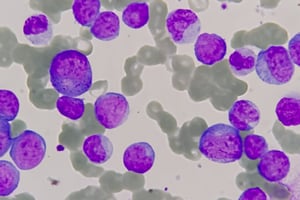
A sample of your blood is examined under a microscope to determine how fast the cancer cells are growing. If the cancer cells are immature “blasts” it means the cells are becoming cancerous in the early development stage. These tend to multiply rapidly. Your oncologist will refer to it as acute leukemia. More mature cancer cells may still function somewhat normally, so the disease tends to grow more slowly. This is called chronic leukemia.
Learn more about the difference between acute and chronic leukemia.
A sample of bone marrow will be used to determine how much has been overtaken by cancer cells. A higher percentage of cancer cells means the cancer is more advanced. They will also look to see if the liver and/or spleen are inflamed due to too many abnormal white blood cells being stored. This is another indicator of more advanced cancer.
Survival is tracked for up to five years after a diagnosis. Each patient’s specific outlook depends a lot on the type of leukemia and how your body responds to treatment. Acute leukemias (like AML and ALL) grow quickly and need immediate treatment. Survival rates vary, but with modern therapies, many people can achieve remission, and some are cured, especially children and younger adults. Chronic leukemias (like CLL and CML) tend to grow more slowly, and many patients live with them for years or even decades.
Another key factor is the patient’s age. Younger patients diagnosed with acute leukemias tend to have a higher survival rate than those who are over 40.
New immunotherapies and targeted therapies have dramatically improved outcomes, especially for chronic myeloid leukemia. Your oncologist will give you the most accurate outlook based on your exact type of leukemia, your age, overall health, and any genetic features of the cancer cells. Read more about leukemia treatments.
No, not everyone with leukemia needs a bone marrow (stem cell) transplant. This treatment is usually considered when the leukemia is aggressive, doesn’t respond well to standard therapies, or has a high risk of returning. Some types of leukemia respond very well to chemotherapy, immunotherapy, or targeted drugs alone, and a transplant may not be necessary. It’s also not usually considered as one of the first treatments, but it is an option if other treatments don’t work as expected.
Yes, leukemia can come back (called relapse) after treatment. The risk depends on the type of leukemia and how well it responded the first time. Acute leukemias are more likely to recur, while chronic leukemias may never fully go into remission and are managed over long periods of time.
If leukemia does recur, your care team will discuss next steps, which may include additional chemotherapy, immunotherapy, targeted drugs, or a bone marrow transplant. Ongoing follow-up visits and regular blood tests are an important part of care after treatment to catch any changes early.
For over 30 years, Rocky Mountain Cancer Centers (RMCC) has been a trusted leader in delivering world-class cancer care across Colorado. Our hematologic oncologists specialize in both cancer care and blood conditions, making our specialists the right fit for leukemia patients. Most patients with leukemia do not receive radiation or have surgery as part of their treatment. This means your oncologist will be the primary caregiver throughout your cancer treatment journey. They are supported by an experienced team of advanced practice providers, infusion nurses, and other team members who are there to help you every step of the way.
Our physicians are dedicated to identifying new and better ways to treat cancer, offering care that is innovative, evidence-based, and personalized for each patient. They are also committed to participating in clinical research trials, bringing the most innovative treatments to our patients here in Colorado. If an active trial is a good fit for you, our clinical research team and your oncologist will discuss this as a treatment option. You have the choice of whether you participate in the trial or follow the care pathway we have established for your type of leukemia.
Read more about clinical research trials for leukemia at RMCC.
The cost of treatment varies based on your diagnosis, insurance coverage, and treatment plan. Our financial counselors will walk you through your insurance benefits and provide a clear picture of what will be covered, along with any out-of-pocket expenses.
Choosing a cancer center like RMCC can significantly reduce your treatment costs. In fact, the Community Oncology Alliance reports that care provided at independent oncology practices such as RMCC can cost up to 50% less than treatment received at hospital-affiliated outpatient departments.
Lower cost doesn’t mean lower quality. RMCC delivers the same advanced treatments, technologies, and personalized care you’d find in a hospital setting—often at a more affordable price and closer to home. RMCC cares for more cancer patients in Colorado than any other practice.
Helpful Tips and Information About Blood Cancers

How Acute Myeloid Leukemia (AML) is Different from Other Blood Cancers
Blood cancer is a broad category that includes several different types of cancer that start in the bone marrow. As the cancer cells grow, the body...

New Immunotherapy for Non-Hodgkin Lymphoma Subtype Showing Promise
You might not be aware that non-Hodgkin lymphoma (NHL) is actually a large group of blood cancers that encompasses more than 60 different subtypes....

Which Tests Are Used to Diagnose and Stage Non-Hodgkin Lymphoma?
Non-Hodgkin lymphoma is a type of blood cancer that develops in the lymphatic system, part of your immune system. The lymphocyte cells, a type of...

How Bone Marrow Transplants are Used to Treat Blood Cancers
Bone marrow transplants are a special type of treatment that is recommended for patients who have certain types of blood cancers and diseases. While...

Leukemia and Lymphoma: The Differences and Similarities
Author: John M. Burke, MD
Many types of cancers start in blood cells. Two common types are leukemia and lymphoma. The two cancers have much in...

Common Symptoms of Leukemia
Author: Chris Benton, MD
Leukemias are certainly not the most common cancer diagnosed in the U.S., but they are more common than many people realize,...

Hodgkin Lymphoma’s Survival Rate: What to Know About This Disease
Author: Paul A. "Tony" DeCarolis, MD
Named after Sir Thomas Hodgkin, the British doctor who discovered the disease, Hodgkin lymphoma is considered a...

What Are the Signs of Lymphoma?
If you’ve noticed a lump in your neck, under an arm, or in the groin area it’s a good idea to monitor it and check for other symptoms of a blood...