Dr. Nallapareddy provides a brief overview of how colorectal cancer develops and why early detection matters. She emphasizes the importance of routine screening to catch the disease before it spreads.
Colorectal Cancer

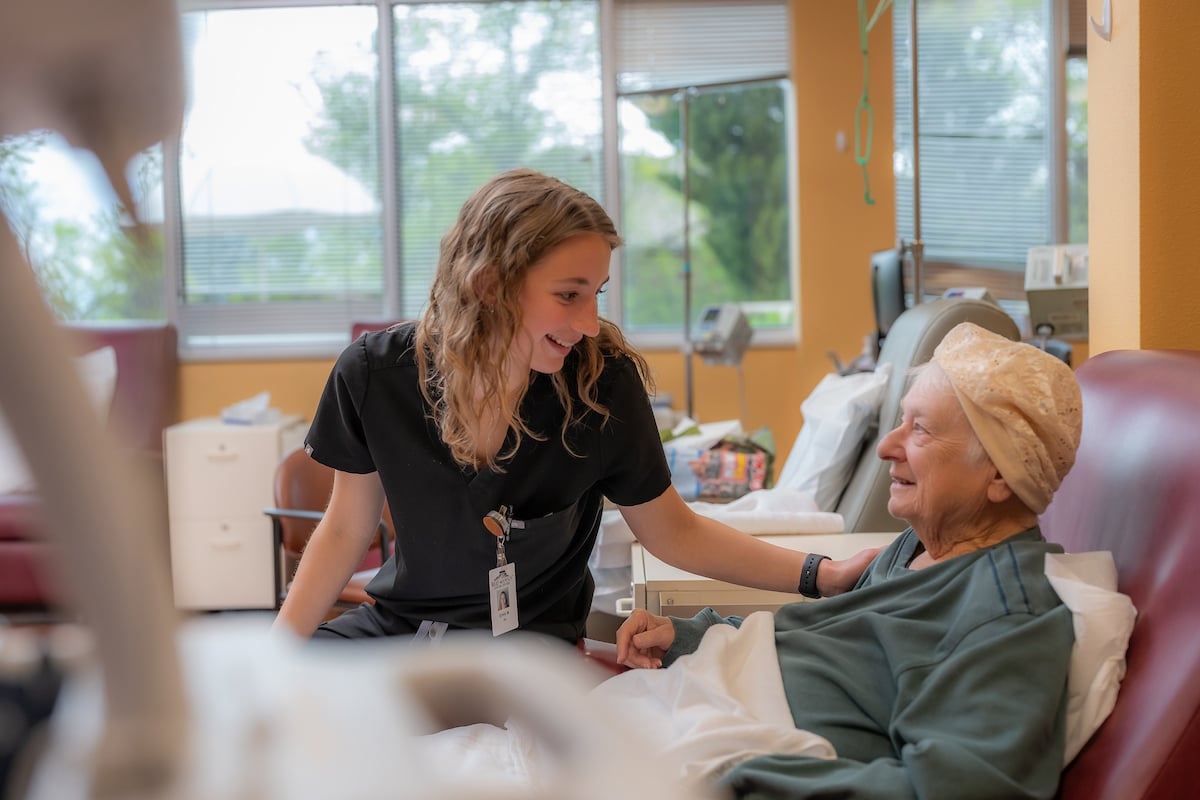
By Your Side Throughout the Colorectal Cancer Care Journey
At Rocky Mountain Cancer Centers, you get more than a colon and rectal cancer doctor – you are connected to an entire team of specialists who are relentlessly dedicated to you and your health. Although we are experts in cancer care, our focus is on the whole patient. This means that in addition to addressing your physical health, we value and support your emotional, social, practical, and spiritual needs as well.
Specializing in Colorectal Cancer Care
Our Team Is Ready to Help You and Your Family
At Rocky Mountain Cancer Centers, you have access to our colorectal cancer specialists at any of our locations across Colorado, including Boulder, Colorado Springs, and Denver. Our team is experienced in compassionate, personalized colorectal cancer care and treatment and offers access to more clinical research trials than any other cancer facility in Colorado.
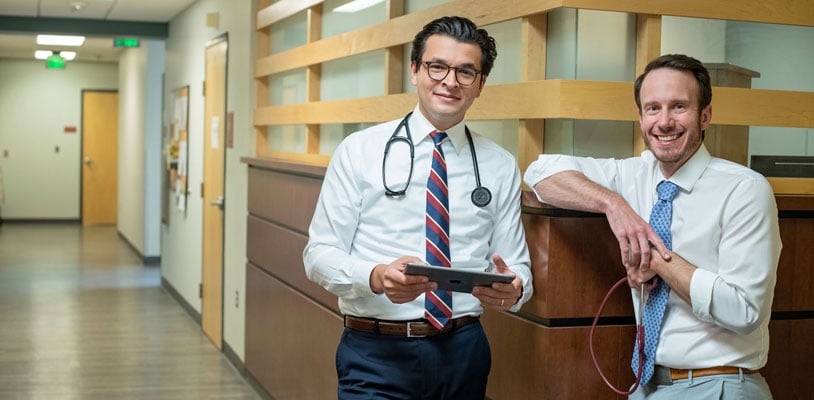
Colorectal Cancer Frequently Asked Questions
A sample of the colon tumor is sent to a lab where the cells are evaluated for any "biomarkers" that indicate a genetic mutation or protein overgrowth is causing cancer to grow. The results of biomarker tests make it possible for your oncologist to create a highly personalized treatment plan that includes targeted therapy or immunotherapy drugs designed to counteract the specific biomarker. If no biomarkers were found in the tumor sample, other treatments are planned for the patient.
The majority of colorectal cancers are not caused by an inherited genetic change. About 5-10% of cases are linked to hereditary conditions:
- Lynch syndrome (also called hereditary nonpolyposis colorectal cancer or HNPCC)
- Familial adenomatous polyposis (FAP)
If you have a strong family history of colorectal cancer or related cancers (such as endometrial, ovarian, or stomach cancer), your doctor may recommend genetic counseling or testing. Early screening and regular checkups are important for people with a family history to help detect cancer when it is easier to treat successfully.
Colorectal cancer can spread, or metastasize, to other parts of the body if it moves beyond the colon or rectum. The most common places it spreads to are the liver and the lungs. It can also spread to the lining of the abdominal cavity (peritoneum), the bones, and, less commonly, the brain. The location of the cancer outside the colon affects the symptoms experienced and also influences the treatment plan. If the tumor is large or colorectal cancer has developed outside of the colon at the time of diagnosis, surgery may not be possible, but other treatments can be given to shrink the cancer.
The specific side effects of colorectal cancer treatment depend on the therapies included in the personalized treatment plan and your response to them. Common side effects include fatigue, nausea and vomiting, neuropathy in the hands and feet, and changes in appetite or taste. Patients receiving FOLFOX chemotherapy may become especially sensitive to heat and cold on their hands and feet.
FOLFOX is a common combination of three chemotherapy drugs often used to treat colorectal cancer. Hair loss is not common with FOLFOX chemotherapy. Some people may notice thinning hair, but most do not lose all their hair. If hair thinning does occur, it’s often temporary, and hair usually grows back after treatment ends. Talk to your oncology nurse, advanced practice provider, or oncologist about any treatment side effects you may be experiencing. They can often offer help to keep them minimized.
Clinical trials offer access to new treatments for colon and rectal cancer that aren't widely available yet. Current studies are especially focused on developing targeted therapies for genetic changes. RMCC participates in several colorectal cancer clinical trials, providing patients with opportunities to explore innovative treatments. Not every patient qualifies, but we are happy to review options for you and make a recommendation for participation if you qualify for one or more trials. Talk with your oncologist about whether a trial may be right for you.
For over 30 years, RMCC has been a leader in delivering world-class cancer care to patients across Colorado. Our oncologists and advanced practice providers were trained in the most renowned cancer centers in the United States and beyond, bringing their expertise to you. They are dedicated to being innovative and forward-thinking, never settling and always seeking the right treatment for their colorectal cancer patients. Meet our colorectal cancer specialists.
Our financial counselors will review your insurance plan's cancer benefits and then meet with you to discuss what will be covered and any out-of-pocket expenses. It's important to note that receiving cancer care at an independent cancer center like Rocky Mountain Cancer Centers results in a lower cost for patients when compared to cancer care at hospital outpatient departments. According to the Community Oncology Alliance, cancer treatment can cost up to 50% less in an independent oncology practice compared to a hospital-affiliated outpatient department.
Receiving affordable cancer care does not mean compromising on quality. We provide the same quality of care as hospital-affiliated oncology departments using advanced technologies and personalized treatments at a more affordable price.
Helpful Tips and Information About Colorectal Cancer From Our Blog

How Ulcerative Colitis Affects Your Colorectal Cancer Risk
If you currently have ulcerative colitis, you likely know it requires ongoing management. What you might not realize, however, is that ulcerative...

Managing Side Effects of FOLFOX Chemotherapy for Colorectal Cancer
Thanks to clinical research, several effective treatment options are available for patients diagnosed with colon and rectal cancer. One effective...

What Are the Differences Between Colon Cancer and Rectal Cancer Treatment?
Colorectal cancer is often talked about as a single type of cancer encompassing both colon and rectal cancers. While they do share many similarities,...

High-grade Colon Dysplasia: Is it Cancer?
You may be feeling a bit concerned if you heard the words "colon dysplasia" following a recent colonoscopy, but try not to be alarmed. In simple...

How to Prepare for Colorectal Cancer Treatment Side Effects
While there are several different treatments for colorectal cancer, a common approach is chemotherapy after surgery. For most colorectal cancer...

Colorectal Cancer Diagnosis: What is Your Prognosis?
After receiving a colorectal cancer diagnosis you may have searched online to understand the survival rate of colon or rectal cancer patients. The...

What are Colon Polyps and Are They Cancerous?
Colon polyps are small clumps of cells that grow on the inside of your large intestine, or colon. While they’re fairly common in the large intestine,...

Recurrent Colorectal Cancer Treatment: What You Need To Know
After colorectal cancer is treated successfully, it is possible that it can recur. Sometimes, small particles of cancer cells are left behind. While...

How Does Early Stage vs Late Stage Colorectal Cancer Affect Treatment Options?
Cancer staging plays a major role in how your colorectal cancer specialist will approach the treatment plan including the types of treatments needed...
RMCC Colorectal Cancer Survivor Stories of Inspiration
Facing Cancer Like an Engineer: A Problem in Search of Solutions
One Sunday afternoon in March 2021, Brandon Martin, 61, was hanging out in his Thornton apartment when he doubled over with pain.
“All of a sudden I...

No Known Risk Factors: A Patient’s Journey Through Stage 3 Colon Cancer Treatment
When Dominique Journet was told she had a tumor after a colonoscopy, she was convinced it couldn’t be cancer. She was otherwise healthy with no...

From Colon Polyps to Incurable Cancer to Becoming Cancer Free
It’s been a busy decade for Mark Hoshall. After all, he went from the discovery of colon polyps during a routine colonoscopy to being diagnosed with...

Grammy Winner and Colon Cancer Survivor Returns to Cancer Clinic as a Performer

Colon Cancer Patient Proves ‘Stage Four’ Does Not Mean ‘Terminal’
This Second Opinion is Key to Finding the Right Cancer Care Team

Let’s Be More Loving, Hopeful, and Optimistic: There’s Hope for Stage 4 Cancer
Diagnosed with colon, liver, and lung cancer at the young age of 59 and given the bleak prognosis of three years of survival, Jeff discovered what...
You’ve Got Two Choices: You Can Let it Defeat You or Take It As a Challenge
Colorado Colorectal Cancer Patient Takes On the Challenge
Colorado colorectal cancer patient Jim Fuller was 62 when he received the diagnosis that...

Colorado Colon Cancer Treatment Leads to Trust in Doctors and Cancer Remission
If you’re newly diagnosed with cancer, there’s not much Bob can tell you to make you feel better. But the 65-year-old does have two pieces of useful...