Bispecific Cancer Therapy
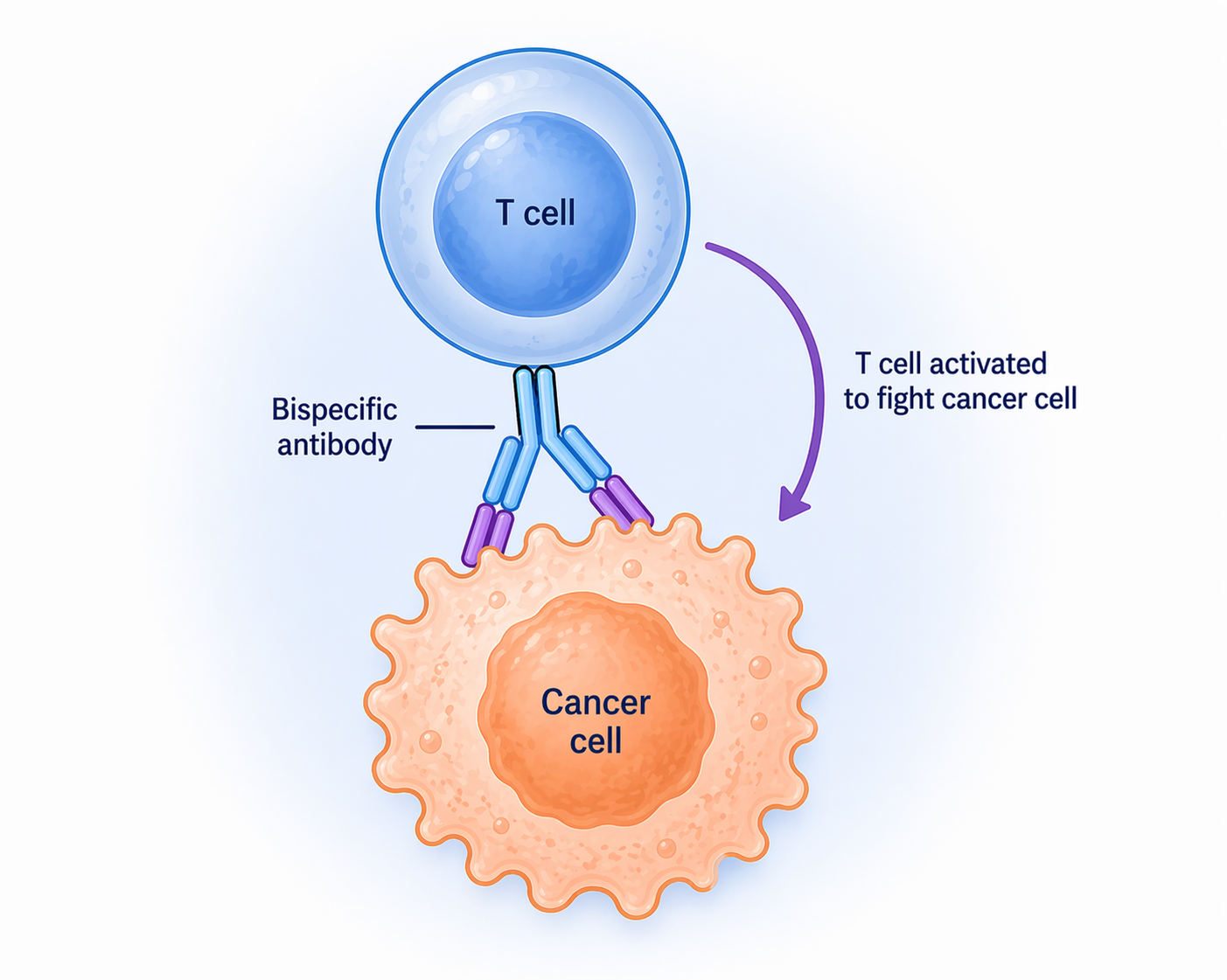
Bispecific antibodies, also called BiTEs or T-cell engagers, help the immune system find and attack cancer cells by acting as a bridge between a T-cell and a cancer cell. T-cells are a type of white blood cell in your immune system, called a lymphocyte. When the two cells are connected by the bispecific antibody, the T-cell turns on and destroys the cancer cell it’s attached to.
This is a highly targeted type of immunotherapy compared to other immunotherapies that broadly stimulate the immune system to identify and destroy cancer cells.
At Rocky Mountain Cancer Centers (RMCC), we are committed to offering innovative therapies like bispecific antibodies as part of a personalized approach to cancer treatment. Our care team will determine whether this option is right for your diagnosis.
How Bispecific Antibody Therapy Works
Each bispecific antibody has two “arms”:
- One arm attaches to a specific marker (antigen) found on the surface of cancer cells
- The other arm binds to a T cell, a type of white blood cell responsible for fighting disease
By linking these together, bispecific antibodies activate the T cell and direct it to attack the cancer cell. This targeted connection helps your immune system respond more quickly and effectively.
What Sets Bispecific Antibodies Apart From Other Cancer Treatments
Bispecific antibody therapy offers several important advantages compared to other cancer treatments:
Targeted approach
Enhanced immune response
No cell modification required
Ready-to-use treatment
What Types of Cancer Can Bispecific Antibodies Treat?
Bispecific antibody therapies are currently approved by the FDA for several types of cancer, including:
- Multiple myeloma
- Certain lymphomas
- Acute lymphoblastic leukemia (ALL)
- Some lung cancers (both non-small cell and small cell)
- Cervical cancer
- Ocular melanoma
Ongoing research continues to explore how these therapies may help treat other cancers, including breast, prostate, gastrointestinal, and kidney cancers. Clinical trials, including those at RMCC, are studying additional ways bispecific antibodies can be used for other types of cancer and in combination with other approved treatments to improve outcomes.
Your RMCC care team will evaluate all options and help determine whether bispecific antibody therapy fits into your treatment plan.
How Bispecific Antibody Therapy Is Given
Bispecific antibody therapy is typically administered in one of two ways:
- Intravenous (IV) infusion
- Injection under the skin
Treatment often begins with smaller doses to help reduce the risk of side effects. Additional medicines, such as steroids and fluids, may also be used to support your body during this time.
Most of RMCC’s patients who receive bispecific therapy can complete treatment at one of our cancer centers. Some patients may require short-term monitoring in the hospital after treatment. Follow-up doses are usually scheduled every one to three weeks, depending on your type of cancer and treatment plan.
Advancing Care Through Clinical Research at RMCC
At Rocky Mountain Cancer Centers, we are dedicated to bringing the latest advances in cancer treatment to patients across Colorado. Through our partnership with Sarah Cannon Research Institute and participation in clinical trials, our physicians help bring new and emerging treatments, including bispecific antibody therapies, to patients while advancing cancer research.
Clinical trials play an essential role in improving outcomes and identifying which treatments work best for each patient. When appropriate, your care team may discuss clinical trial opportunities as part of your overall treatment plan.
Personalized Cancer Care in Colorado
Each patient’s cancer journey is unique. At RMCC, we create your treatment plan based on your specific diagnosis, health history, and personal goals. Our team is dedicated to explaining your options and answering any questions you may have. If bispecific therapy could be beneficial for you, we will guide you every step of the way throughout your care.