TNM Staging and Resectability
The ability to remove the cancer will be combined with the TNM staging system to assign a number from 0 to 4 (IV).
Also called in situ, these abnormal cells are found only in the lining of the pancreas and have not spread. They can become cancerous over time.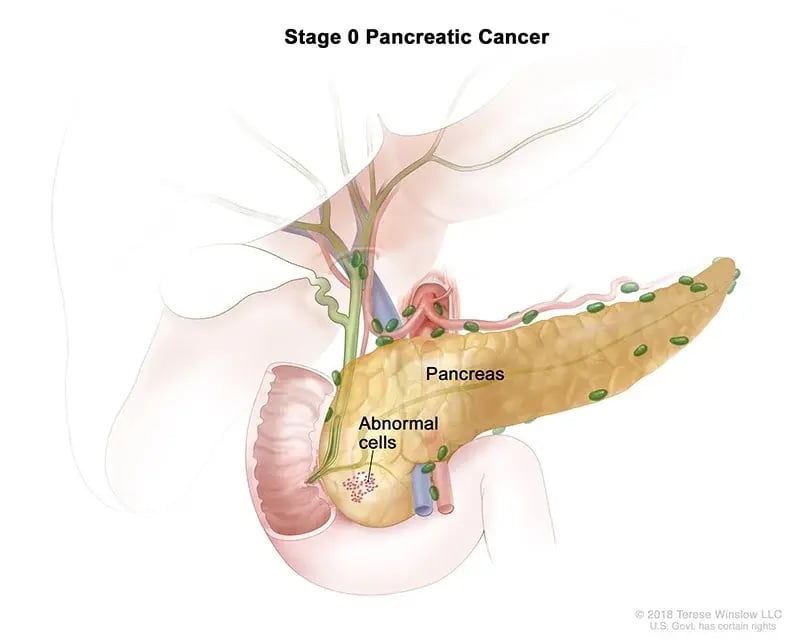
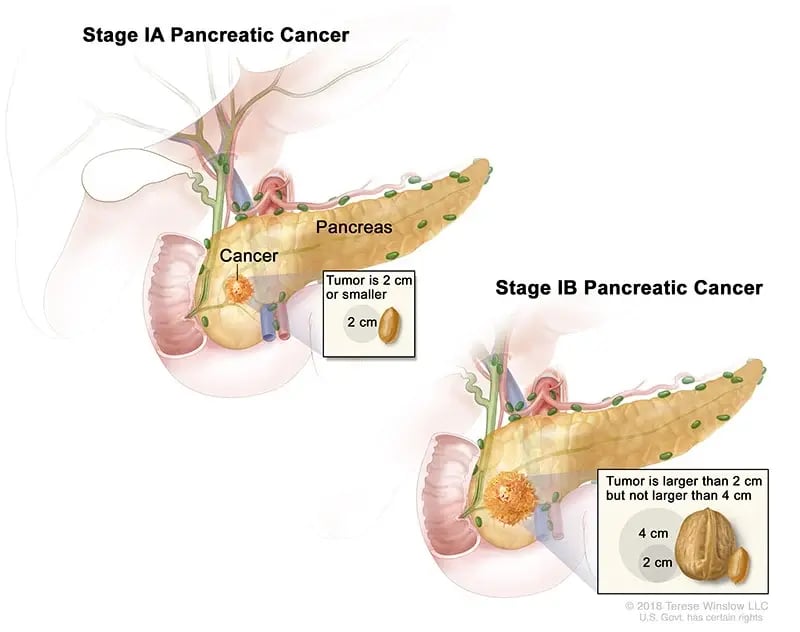
The cancer is only in the pancreas and has not spread to lymph nodes or other parts of the body. Tumors at this stage are usually small and resectable. It’s broken into stages IA and IB:
At this stage, local spread just outside the pancreas or to a few nearby lymph nodes is possible. The tumor is usually resectable or borderline resectable.
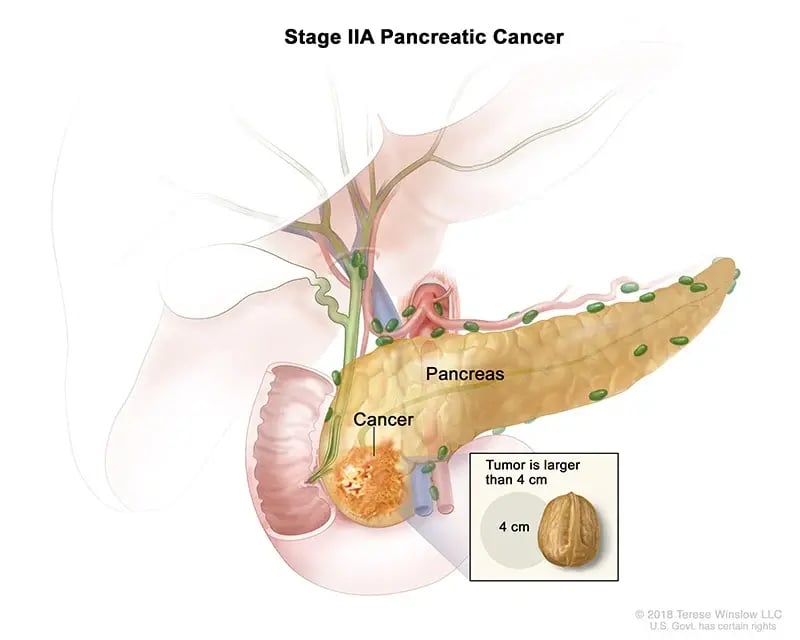
Stage IIA is a smaller tumor that has not affected the lymph nodes
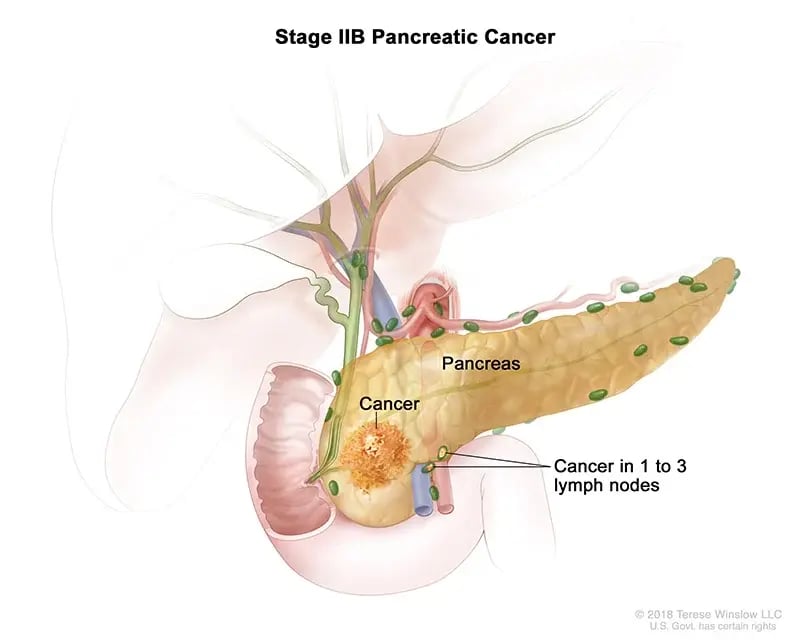
Stage IIB tends to be slightly larger and may involve areas outside the pancreas, including some nearby lymph nodes.
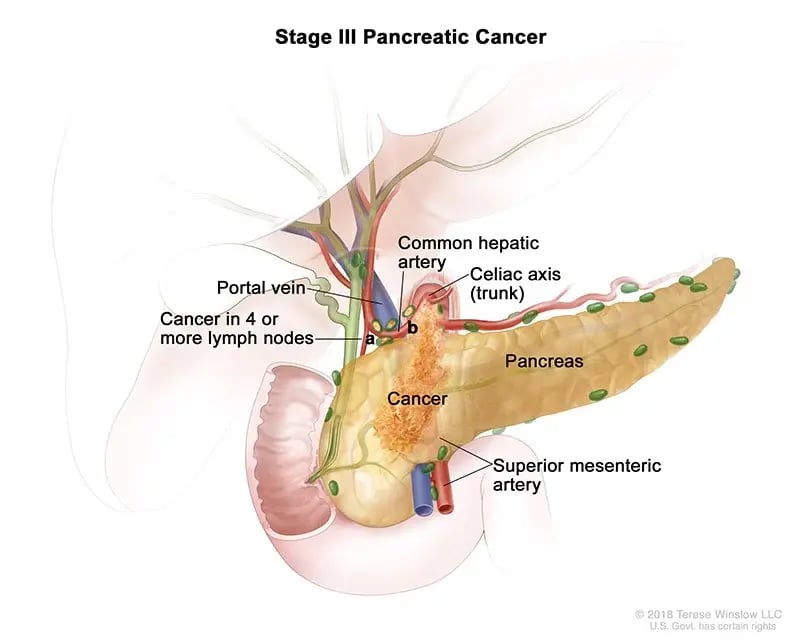
Most stage III pancreatic cancers are unresectable, which means the tumor usually cannot be removed. Cancer has grown too far into the areas around the pancreas and/or into too many lymph nodes to remove all of the cancer cells surgically. Medical oncology treatments such as chemotherapy and targeted therapy are used as the primary treatments.
Stage III pancreatic cancer is
- A tumor of any size that has spread to 4 or more regional lymph nodes but not to nearby arteries, veins, or other parts of the body.
- A tumor that has spread to nearby arteries and veins and may have spread to regional lymph nodes. It has not spread to other parts of the body.
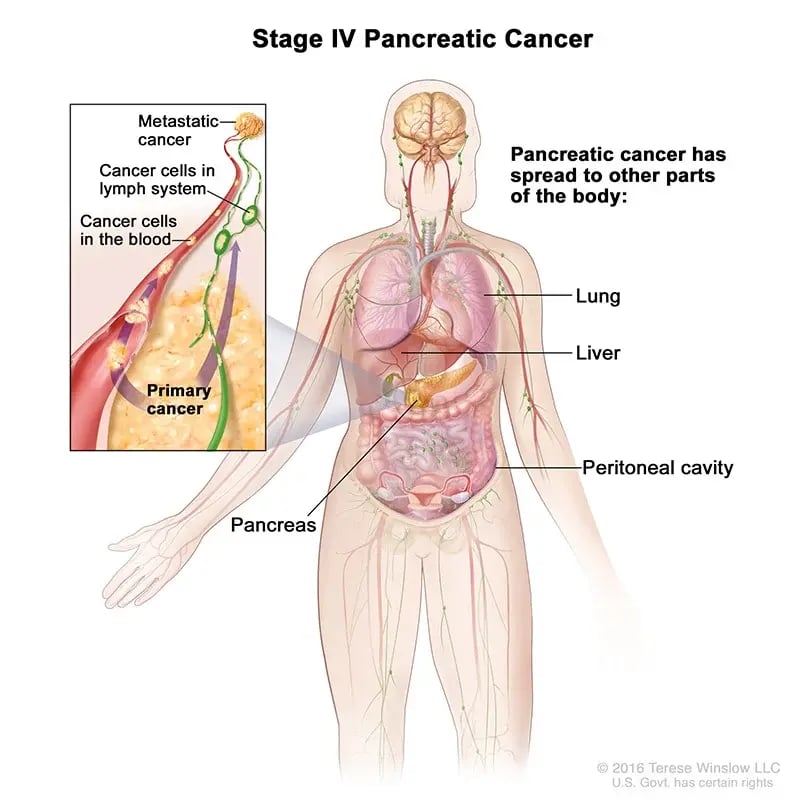
The cancer has spread to distant parts of the body, such as the liver or lungs. It is not resectable however, palliative surgery to relieve symptoms may be needed. Treatment focuses on slowing the cancer’s growth and supporting the patient’s quality of life.